
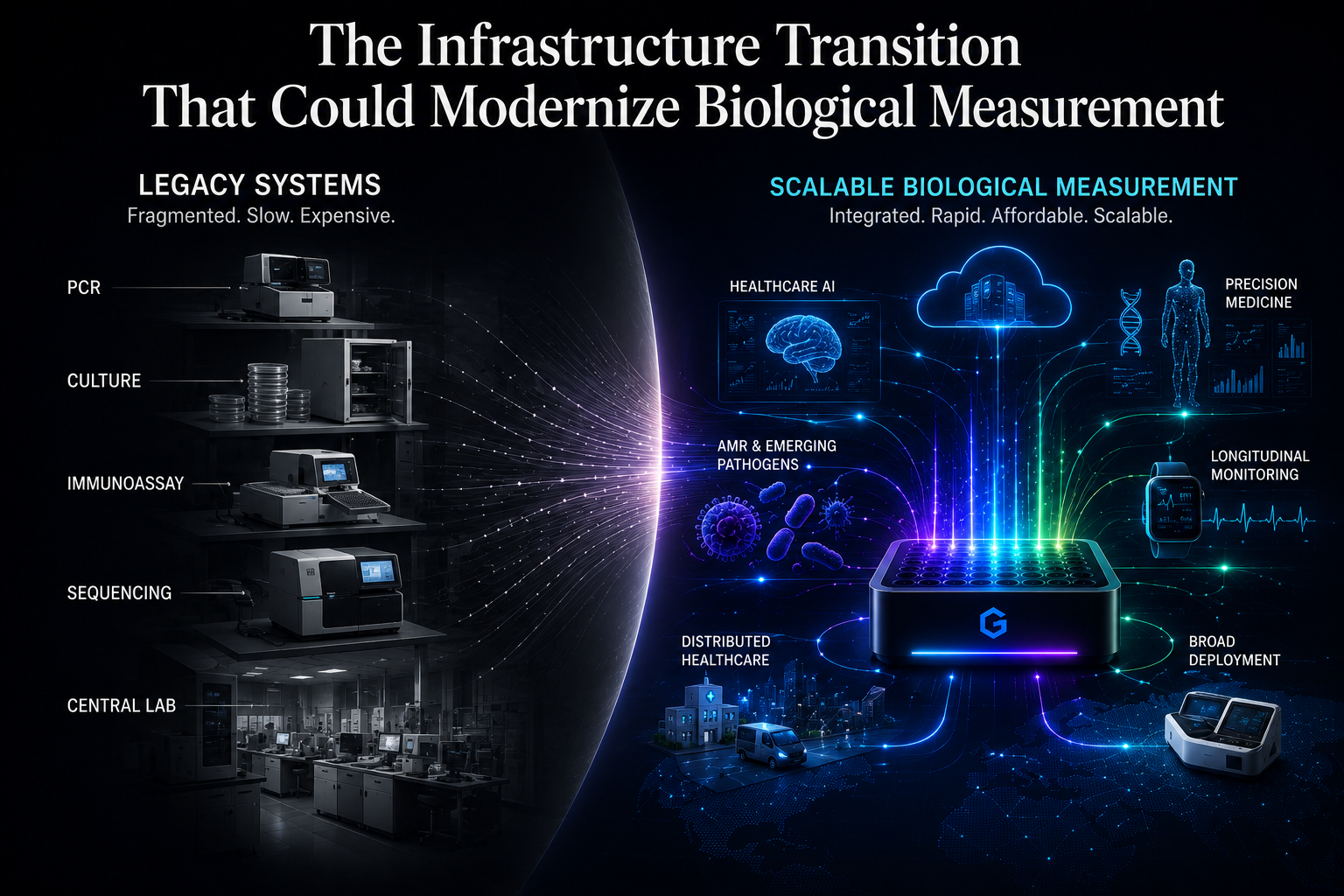
Modern Medicine Requires More Biological Data Than Legacy Diagnostics Can Generate
Modern medicine increasingly depends on rapid, affordable, high-density biological measurement.
Advanced diagnostics require more scalable testing systems than legacy laboratory architectures were designed to support. Yet most diagnostics still rely on fragmented workflows developed decades ago for isolated laboratory testing rather than continuous, information-driven healthcare.
Guanine is developing a programmable signal architecture designed to modernize biological measurement through scalable, deployable, and expandable testing infrastructure capable of supporting the next generation of diagnostics, pathogen surveillance, distributed healthcare, and healthcare AI.
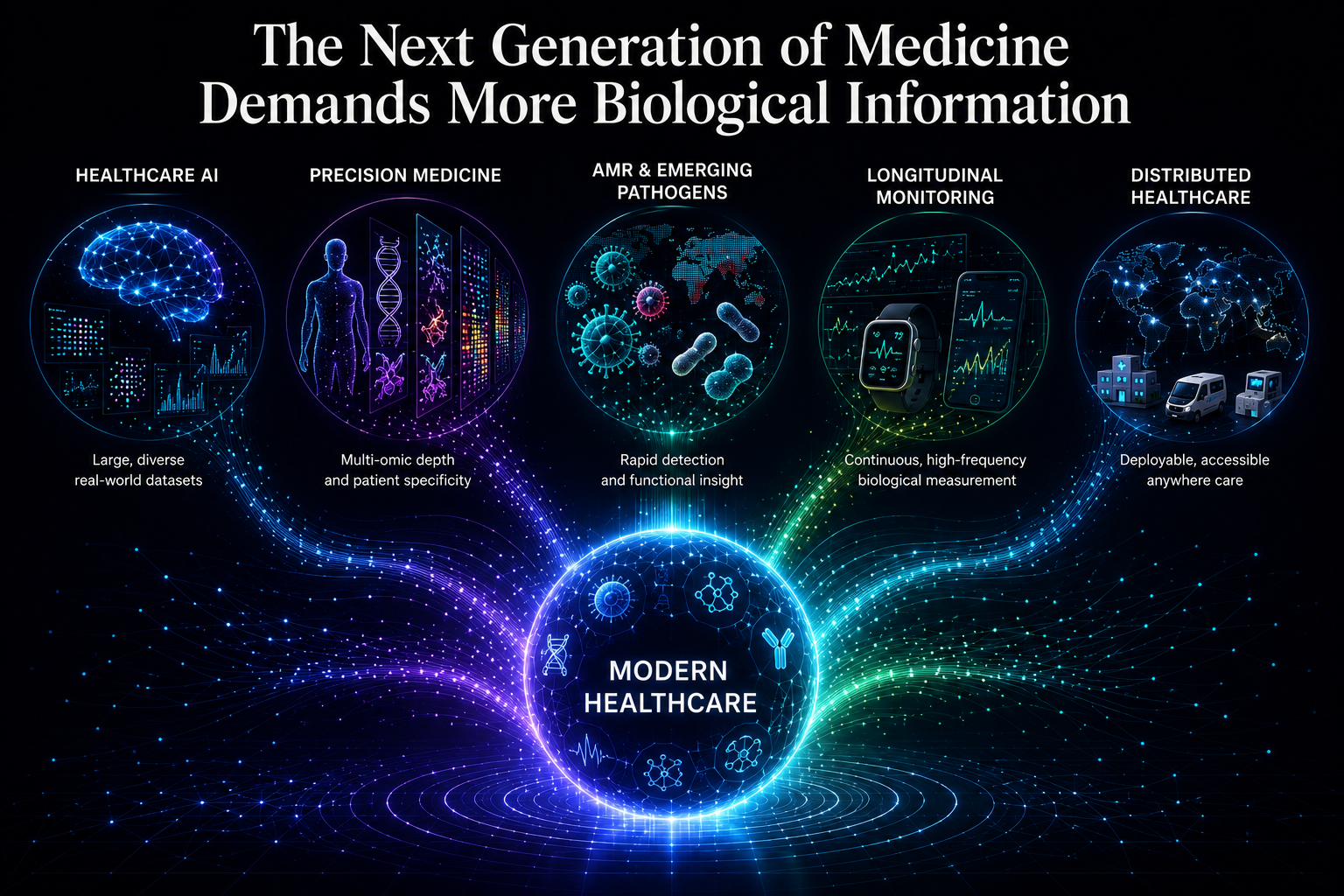
The Next Generation of Medicine Requires Scalable Biological Measurement
Modern healthcare increasingly depends on biological testing that is faster, lower cost, more deployable, and capable of generating richer biological datasets than legacy systems were designed to support.
Healthcare AI requires vastly larger real-world biological datasets. Precision medicine increasingly depends on multiplex biological analysis rather than isolated biomarkers. Antimicrobial resistance and emerging pathogens require faster functional biological intelligence than centralized laboratory workflows can deliver.
Longitudinal monitoring increasingly depends on higher-frequency biological measurement over time rather than isolated diagnostic snapshots. Distributed healthcare requires advanced testing to expand beyond centralized laboratory infrastructure into broader clinical and global environments.
Yet most diagnostic systems remain fragmented across specialized modalities that often force tradeoffs between sensitivity, multiplexing, speed, deployment, affordability, and biological depth.
As medicine becomes increasingly data-driven, technologies capable of generating richer biological measurement at lower cost and across broader deployment settings may become foundational to future healthcare systems.
A New Infrastructure Model for Biological Testing
Most legacy diagnostic systems expand capability by increasing instrumentation complexity, workflow specialization, infrastructure burden, and cost.
As medicine increasingly depends on richer biological measurement, these architectures become more difficult to scale across advanced clinical and distributed healthcare environments.
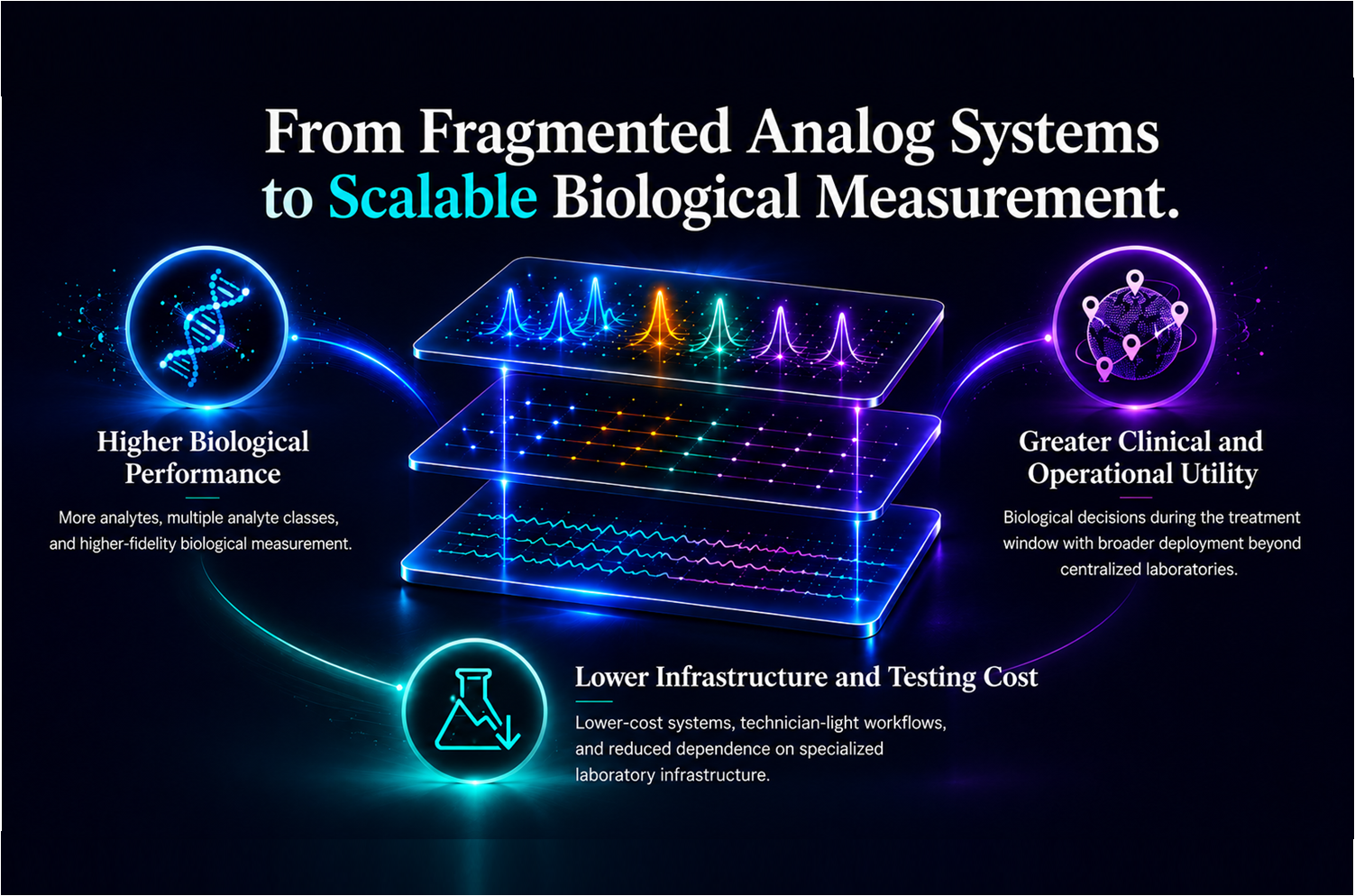
Guanine is developing a programmable signal architecture designed around a different scaling model: expanding biological capability on shared lower-cost infrastructure rather than building separate hardware systems for every application category.
Higher Biological Performance
More analytes, multiple analyte classes, and higher-fidelity biological measurement.
Greater Clinical and Operational Utility
Biological decisions during the treatment window with broader deployment beyond centralized laboratories.
Lower Infrastructure and Testing Cost
Lower-cost systems, technician-light workflows, and reduced dependence on specialized laboratory infrastructure.
Importantly, the long-term opportunity extends beyond individual diagnostic assays.
A shared measurement architecture creates the potential for expanding biological applications, distributed deployment models, OEM platform integration, recurring cartridge ecosystems, and scalable healthcare data generation across healthcare and pathogen testing markets.
As medicine becomes increasingly data-driven, scalable biological measurement systems may become foundational infrastructure for the next generation of diagnostics, healthcare AI, and distributed healthcare systems.
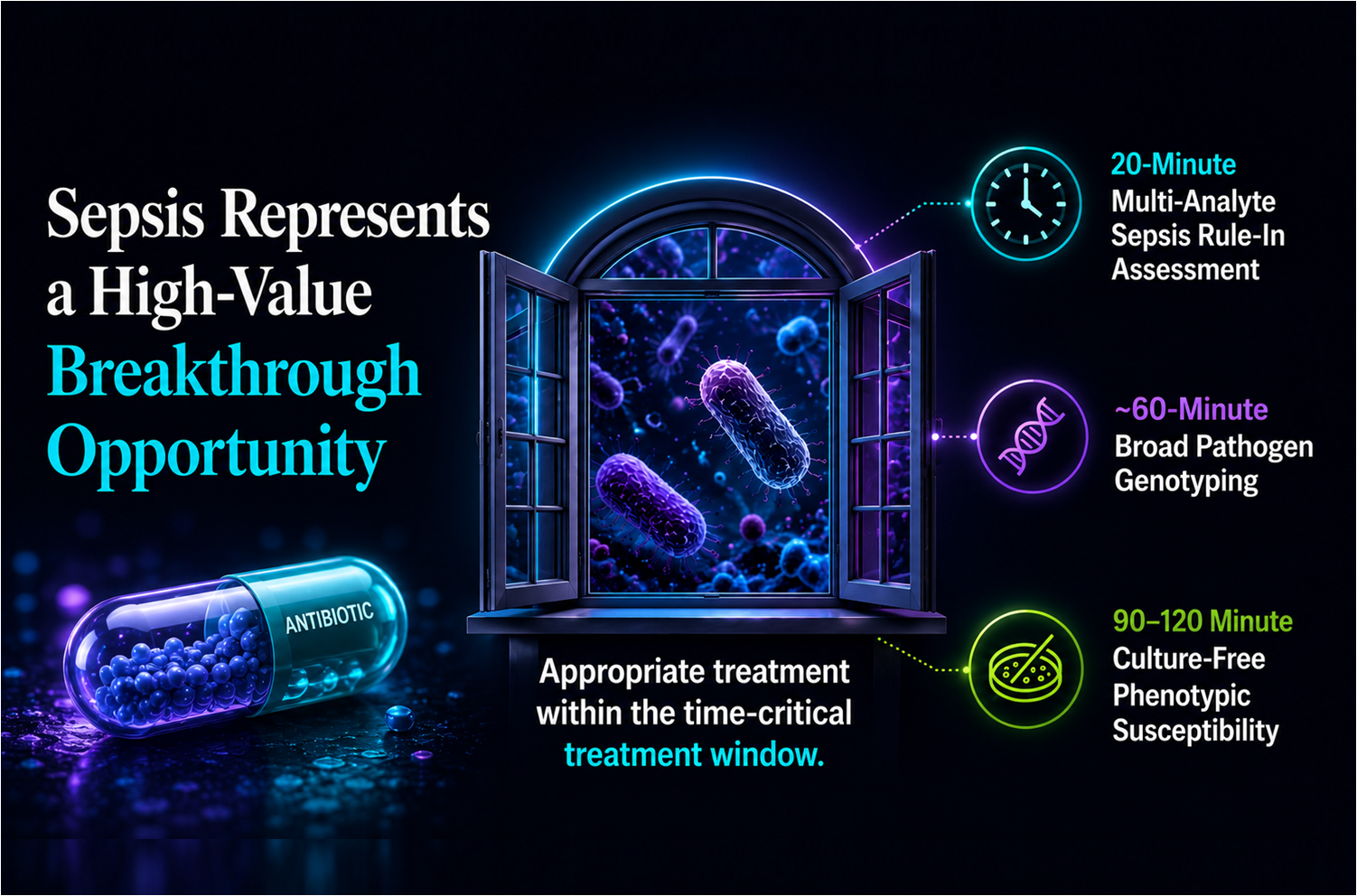
Sepsis Represents a High-Value Breakthrough Opportunity
Sepsis was identified by Mount Sinai’s clinical team as one of the strongest initial deployment opportunities for the platform based on its combination of major unmet clinical need, large economic burden, fragmented workflows, and the absence of rapid integrated biological decision systems.
Current sepsis workflows often force clinicians to make treatment decisions before actionable biological information becomes available. Existing systems typically require tradeoffs between speed, pathogen coverage, phenotypic response, biological depth, and deployment practicality.
20-Minute Multi-Analyte Sepsis Rule-In Assessment
Rapid inflammatory biomarker testing designed to support early biological assessment, BDP-aligned deployment, and initial payer reimbursement pathways.
~60-Minute Broad Pathogen Genotyping
Integrated detection of diverse pathogens and resistance markers, including atypical and difficult-to-culture organisms.
90–120 Minute Culture-Free Phenotypic Susceptibility
Rapid functional biological response measurement designed to provide antimicrobial susceptibility information without requiring traditional multi-day culture workflows.
Together, these capabilities are intended to support earlier targeted therapy, improved antimicrobial stewardship, reduced ICU burden, faster biological decisions, and lower infrastructure complexity.
Sepsis is not the endpoint of the platform. It is the first large-scale deployment opportunity for a programmable biological measurement architecture designed to expand across broader diagnostic, pathogen surveillance, OEM, and distributed healthcare markets over time.
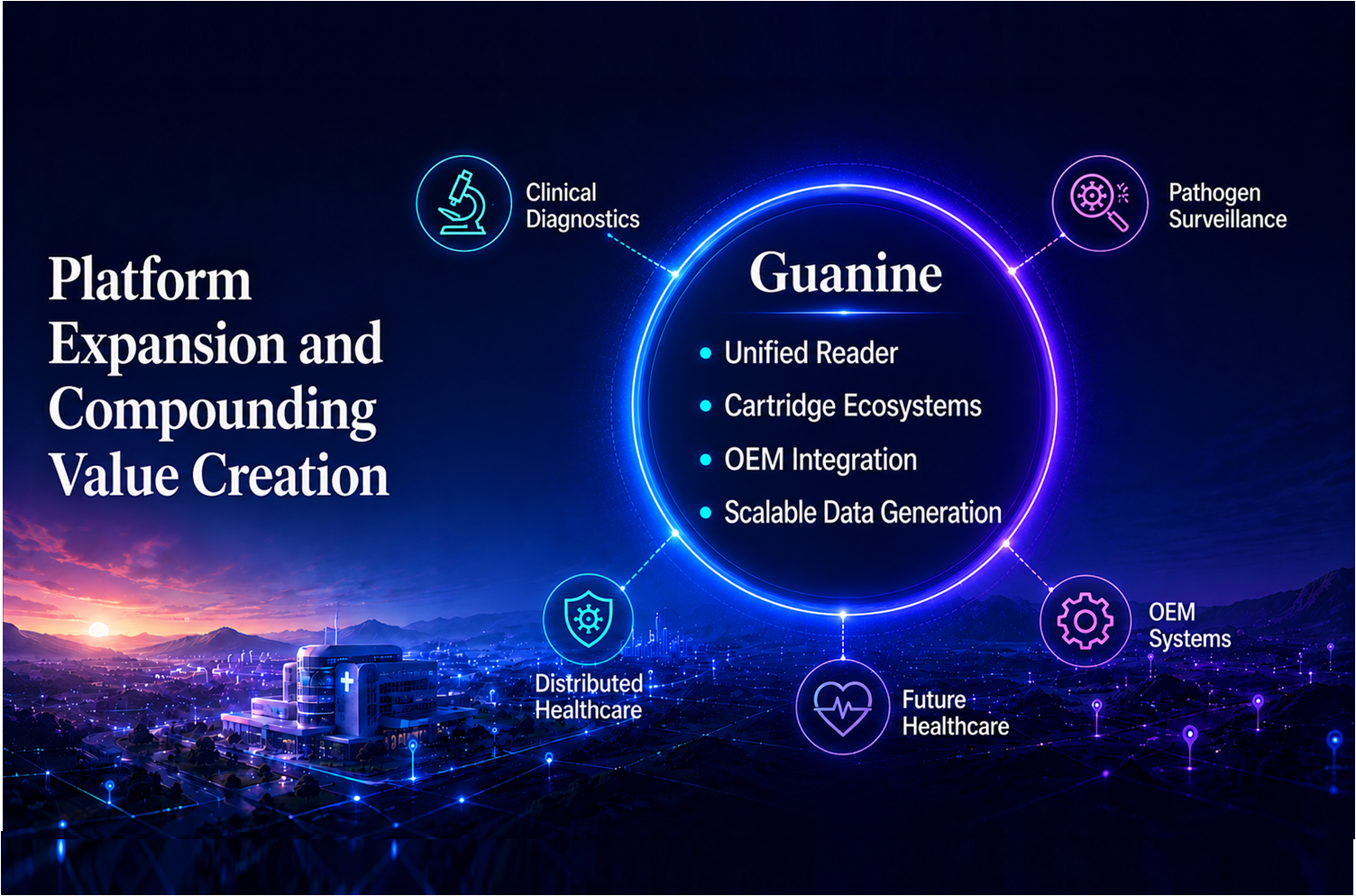
One Architecture. Expanding Biological Markets.
Most diagnostic systems are built for isolated applications within fixed hardware categories.
Expanding into new biological markets often requires entirely new instrumentation systems. Guanine is being designed around a different model: expanding biological capability on shared programmable infrastructure.
This creates the potential to scale across:
- clinical diagnostics
- pathogen surveillance
- distributed healthcare
- OEM biological systems
- future healthcare applications
As new assays and applications are added, the platform is intended to expand through:
- shared reader infrastructure
- recurring cartridge ecosystems
- OEM integration
- scalable healthcare data generation
The long-term opportunity is not limited to individual assays. It is the potential creation of scalable biological measurement infrastructure capable of supporting expanding healthcare and pathogen testing markets over time.
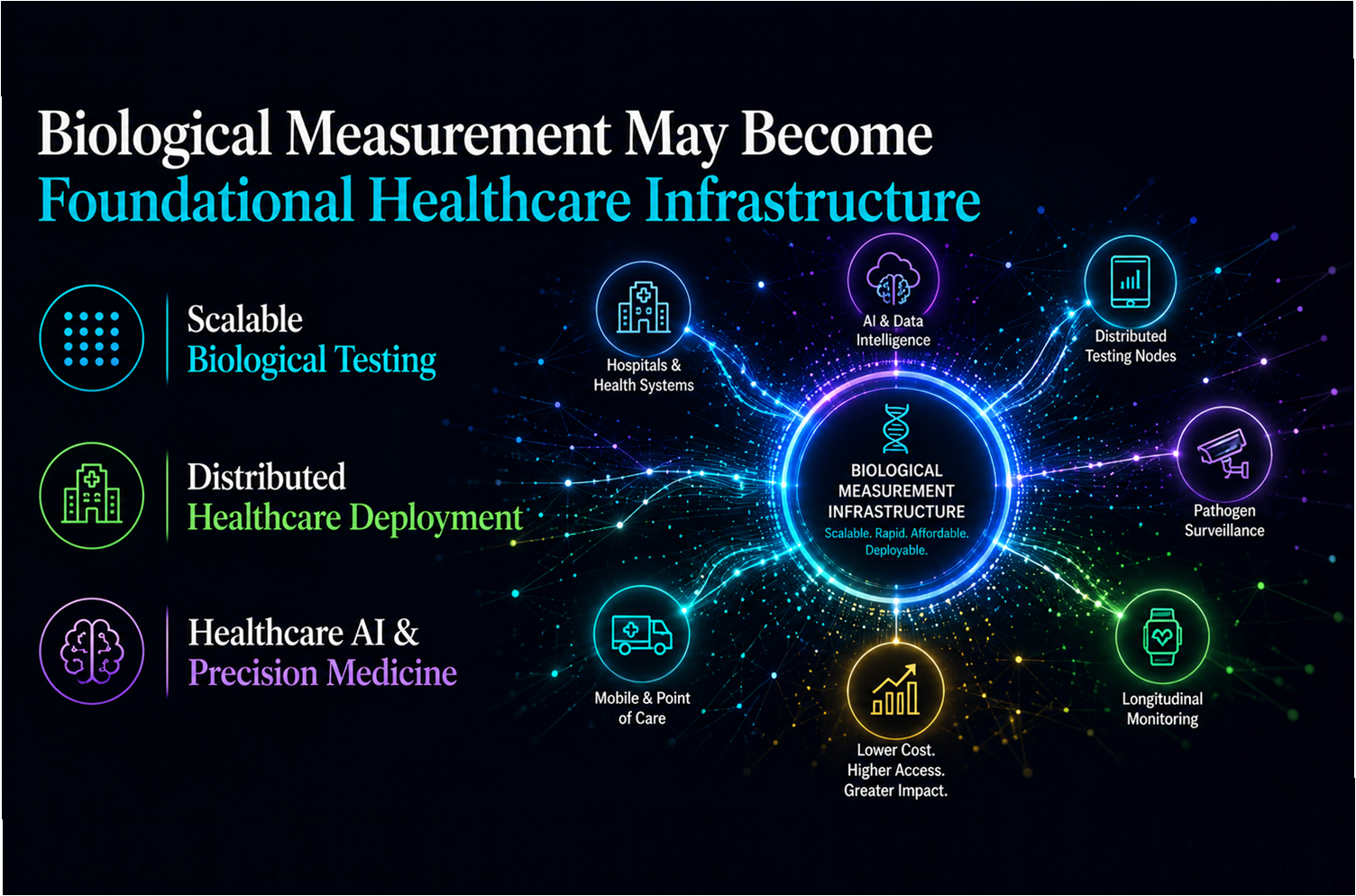
Biological Measurement May Become Foundational Healthcare Infrastructure
Modern healthcare increasingly depends on scalable biological measurement.
Healthcare AI, precision medicine, distributed diagnostics, pathogen surveillance, and longitudinal monitoring all require more rapid, affordable, and deployable testing systems than legacy architectures were designed to support.
Technologies capable of generating richer biological measurement at lower cost and across broader deployment environments may become increasingly important infrastructure for future healthcare systems.
Guanine is being designed to support this transition through:
- scalable biological testing
- lower-cost deployment
- integrated biological workflows
- expandable infrastructure capable of supporting multiple healthcare markets
As medicine becomes increasingly data-driven, scalable biological measurement may become foundational to the next generation of healthcare systems.

Built for Phased Commercialization and Expanding Platform Defensibility
Guanine’s strategy is designed around phased deployment rather than requiring full platform adoption from the outset.
The initial commercialization pathway begins with sepsis, where unmet clinical need, hospital economics, and reimbursement potential create a high-value entry point for the technology.
As the platform expands, each successive application has the potential to strengthen:
- installed infrastructure
- recurring cartridge economics
- healthcare dataset generation
- OEM integration
- long-term platform defensibility
The platform is also designed around multiple interdependent signal, workflow, cartridge, and deployment layers capable of strengthening technical and commercial defensibility as the system expands across broader healthcare and pathogen testing markets.
Positioned at the Intersection of Diagnostics, Distributed Healthcare, and Healthcare AI
The next generation of healthcare increasingly depends on scalable biological measurement.
Yet modern diagnostics remains constrained by fragmented architectures that were not designed for rapid biological decisions, distributed deployment, dynamic biological response, or large-scale healthcare data generation.
Guanine is being designed around a different infrastructure model: scalable programmable biological measurement capable of supporting expanding healthcare and pathogen testing applications on shared lower-cost systems.
The initial deployment pathway begins with sepsis. The broader opportunity is the modernization of biological measurement itself.