
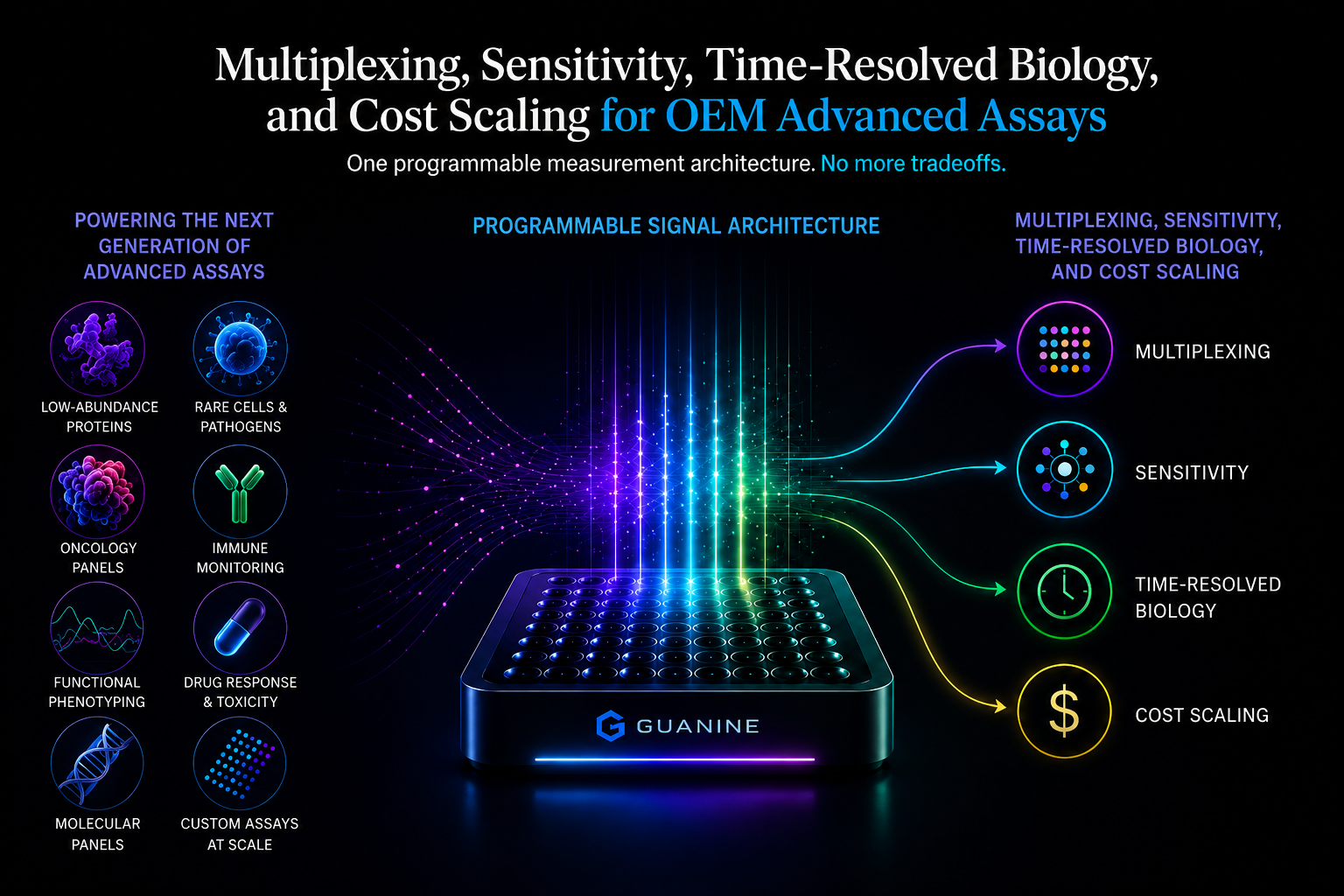
Build assays that existing platforms cannot support
Advanced assays fail when measurement systems cannot capture sparse, dynamic, multi-dimensional biology within practical cost and deployment constraints.
Guanine replaces instrument-by-instrument development with a unified measurement architecture—allowing OEMs to develop advanced assays without building new systems for each biomarker or workflow.
Advanced Assays Are Constrained by Legacy Measurement Systems
OEM diagnostic developers are building increasingly sophisticated biological assays requiring:
- higher multiplexing
- lower detection limits
- quantitative biological measurement
- dynamic response monitoring
- simplified distributed deployment
But legacy systems force tradeoffs between:
- multiplexing and sensitivity
- assay complexity and workflow simplicity
- biological insight and deployability
- performance and cost scaling
As assays become more advanced, OEM developers are increasingly forced to build expensive proprietary instrumentation, integrate fragmented technology stacks, centralize testing workflows, limit deployment accessibility, and sacrifice biological capability to maintain workflow feasibility.
For many advanced assays, the limitation is no longer the biology. It is the measurement system.
A Unified Measurement Platform for Advanced Biological Assays
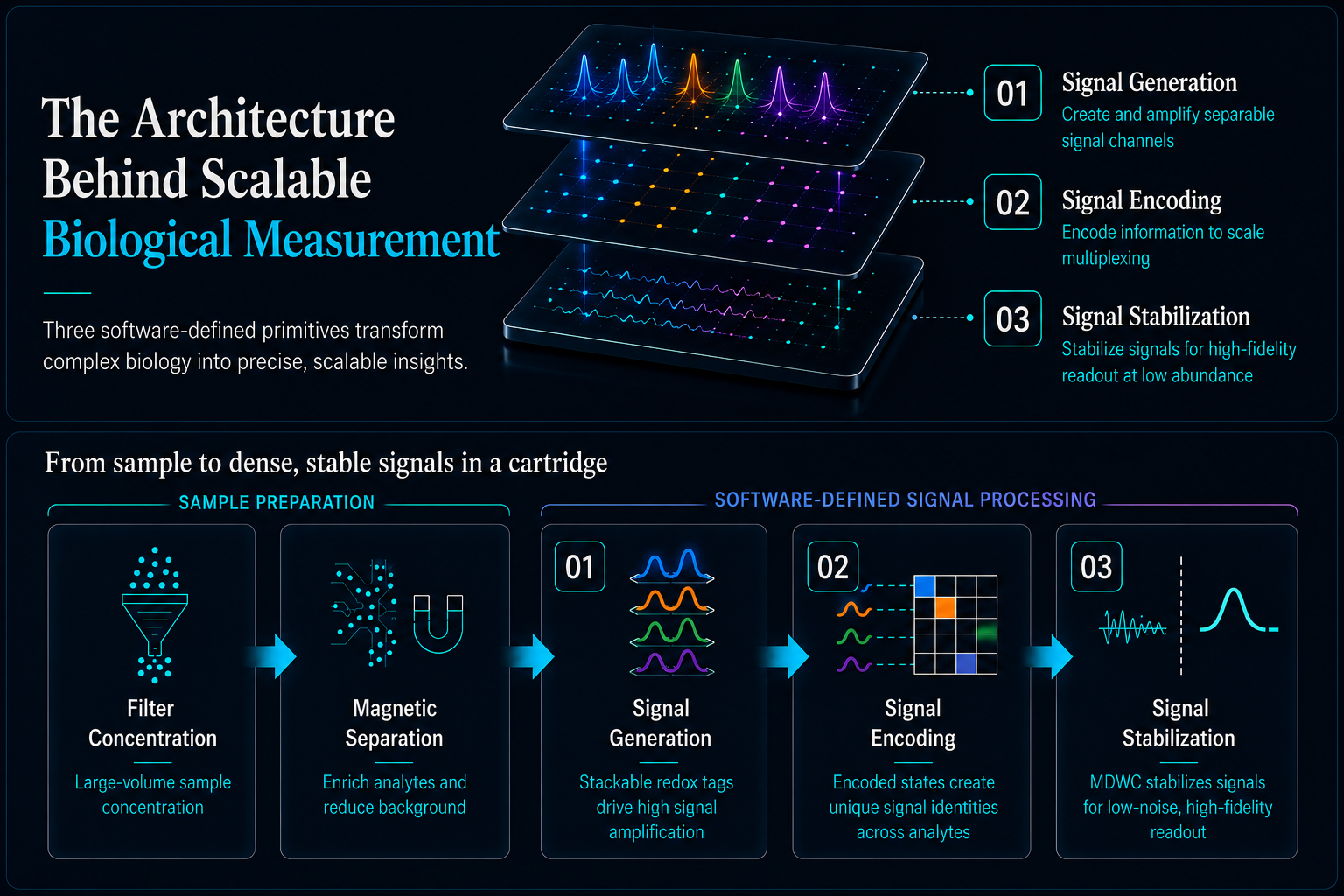
Guanine enables advanced biological measurement within one programmable electrochemical platform designed for next-generation OEM assays.
Instead of requiring separate systems for multiplexing, sensitivity, temporal biology, and deployment, these capabilities operate within one integrated measurement platform.
Multiplex Biological Measurement
Dense biological measurement across nucleic acids, proteins, metabolites, cells, small molecules and redox.
Quantitative Sensitivity
Measurement of low-abundance biological targets with stable quantitative outputs.
Time-Resolved Biology
Continuous monitoring of dynamic biological response over time.
Distributed Deployment
Compact low-cost systems designed for broader clinical accessibility beyond centralized laboratories.
OEM developers can focus on biological innovation rather than building increasingly complex infrastructure systems.
Explore the underlying signal technologyHow Multi-Domain Biological Measurement Could Scale Differently
Consider a programmable biological measurement workflow designed to support the integration of:
- circulating tumor DNA (ctDNA)
- circulating tumor cells (CTCs)
- protein biomarkers
- inflammatory markers
- immune-response signatures
- longitudinal treatment monitoring
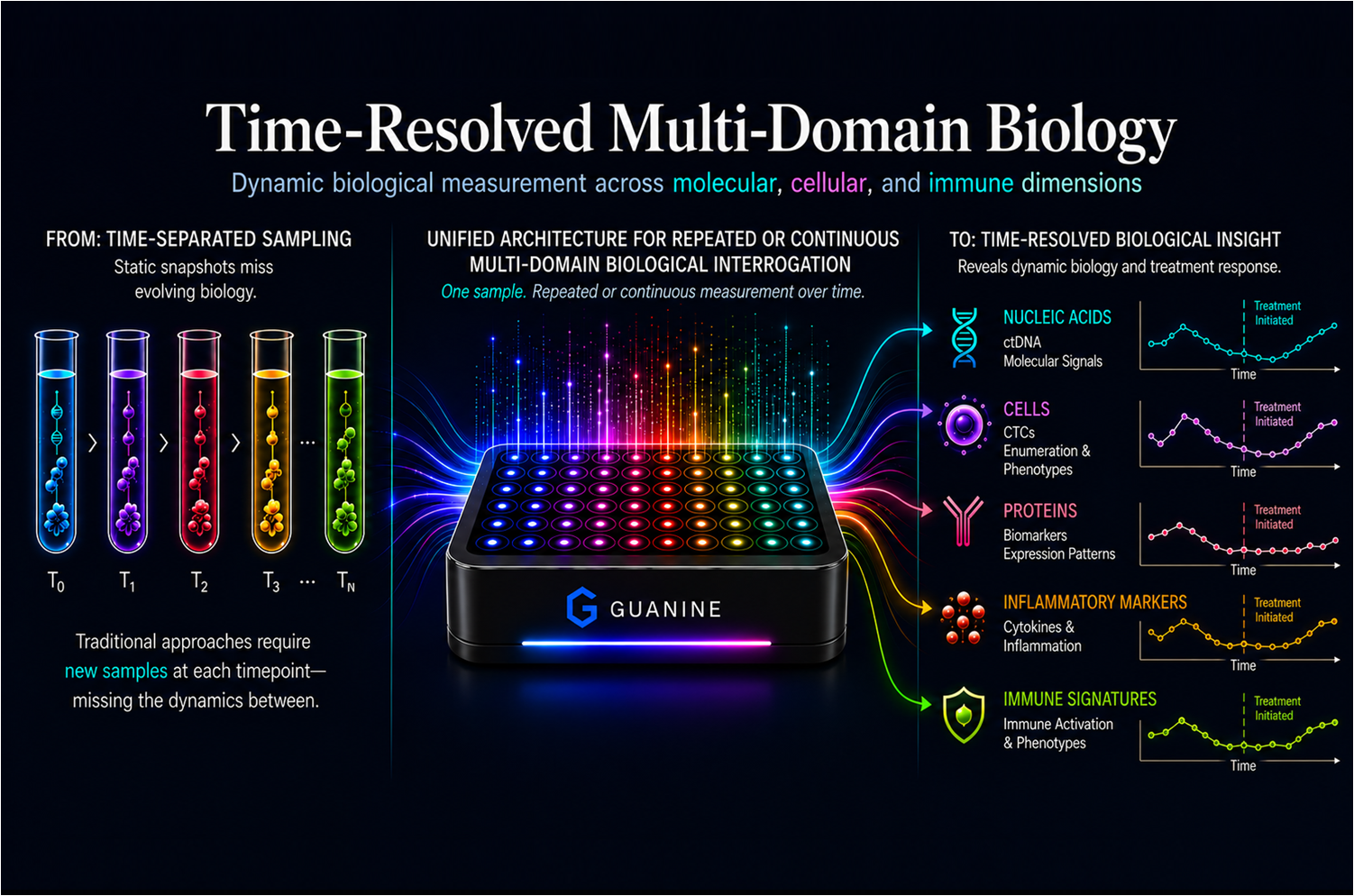
Within a programmable electrochemical sensing architecture, these biological domains could be interrogated through synchronized multi-analyte workflows, adaptive signal stabilization, and cartridge-based operation across repeated or time-resolved measurement intervals.
Rather than relying on separate instrument systems for each biological modality, a shared programmable architecture could support integrated molecular, cellular, inflammatory, and immune-related measurement workflows within a unified sensing platform.
Potential implementations could include:
- quantitative multi-domain biological measurement
- integrated biomarker workflows
- automated cartridge-based operation
- lower-complexity instrumentation
- distributed deployment environments
- repeated biological interrogation over time
This type of architecture could support broader accessibility, simplified operational workflows, scalable data generation, and expanded biological monitoring capabilities across research and future clinical applications.
The objective is not simply faster testing, but a more scalable and programmable approach to biological measurement.
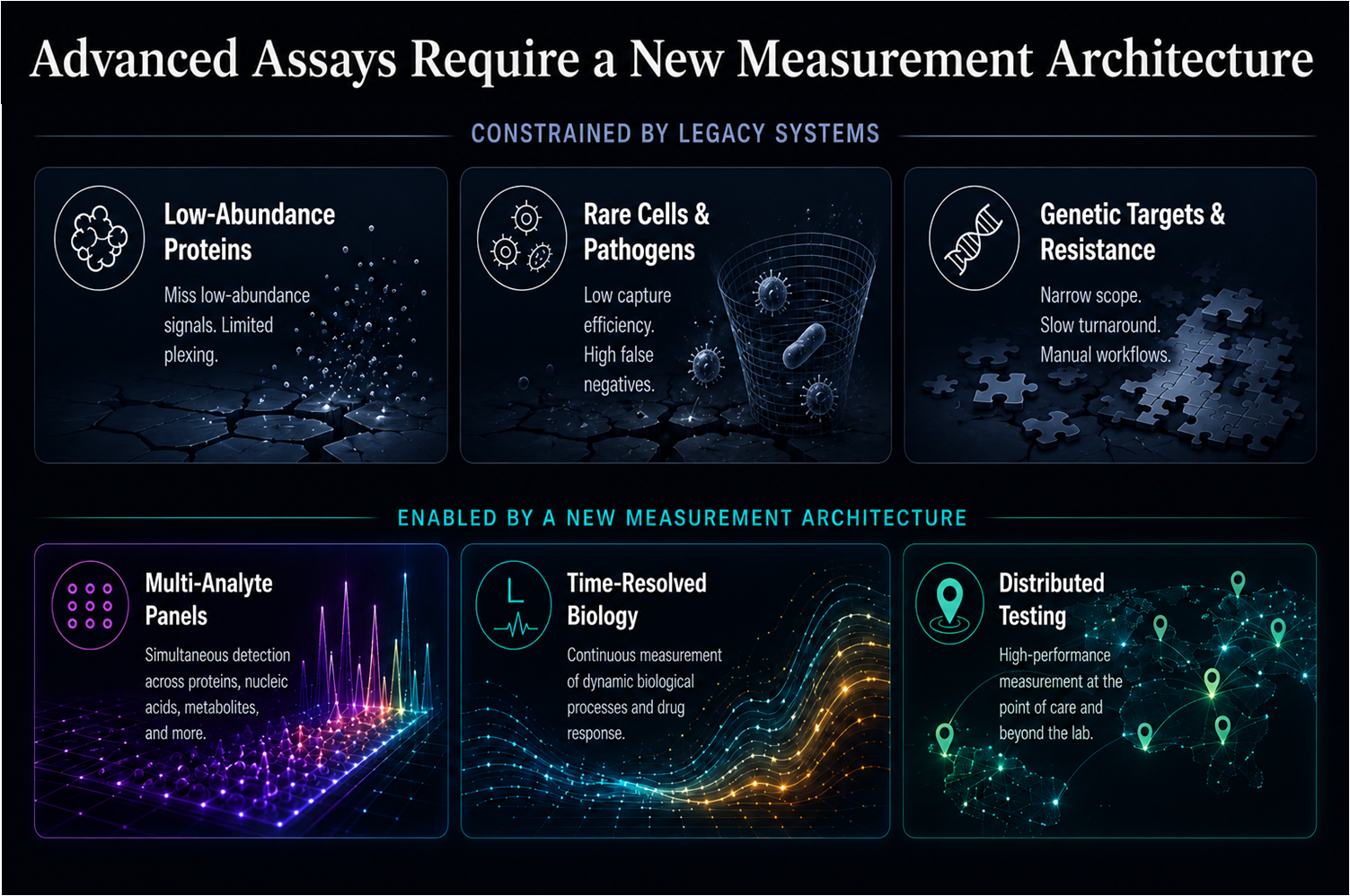
Designed for Advanced Biological Measurement Categories
The Guanine platform is designed for assay categories where conventional systems struggle to simultaneously support:
- multiplexing
- sensitivity
- temporal measurement
- scalable deployment economics
The architecture enable advanced assays constrained by legacy systems:
- low-abundance proteins
- rare cells and pathogens
- genetic targets and resistance
and facilitates a new generation of applications:
- multi-analyte panels
- time-resolved biology
- distributed testing
The same programmable platform can support multiple advanced assay categories without requiring separate measurement systems for each application.
A New Economic Model for Advanced Biological Assays
Many advanced assays remain difficult to scale because the underlying measurement systems were not designed for high-density, multi-domain biological analysis.
OEM developers often face:
- high instrument capital requirements
- centralized laboratory dependence
- fragmented multi-system workflows
- technician-intensive operation
- expensive deployment environments
- limited scalability outside specialized labs
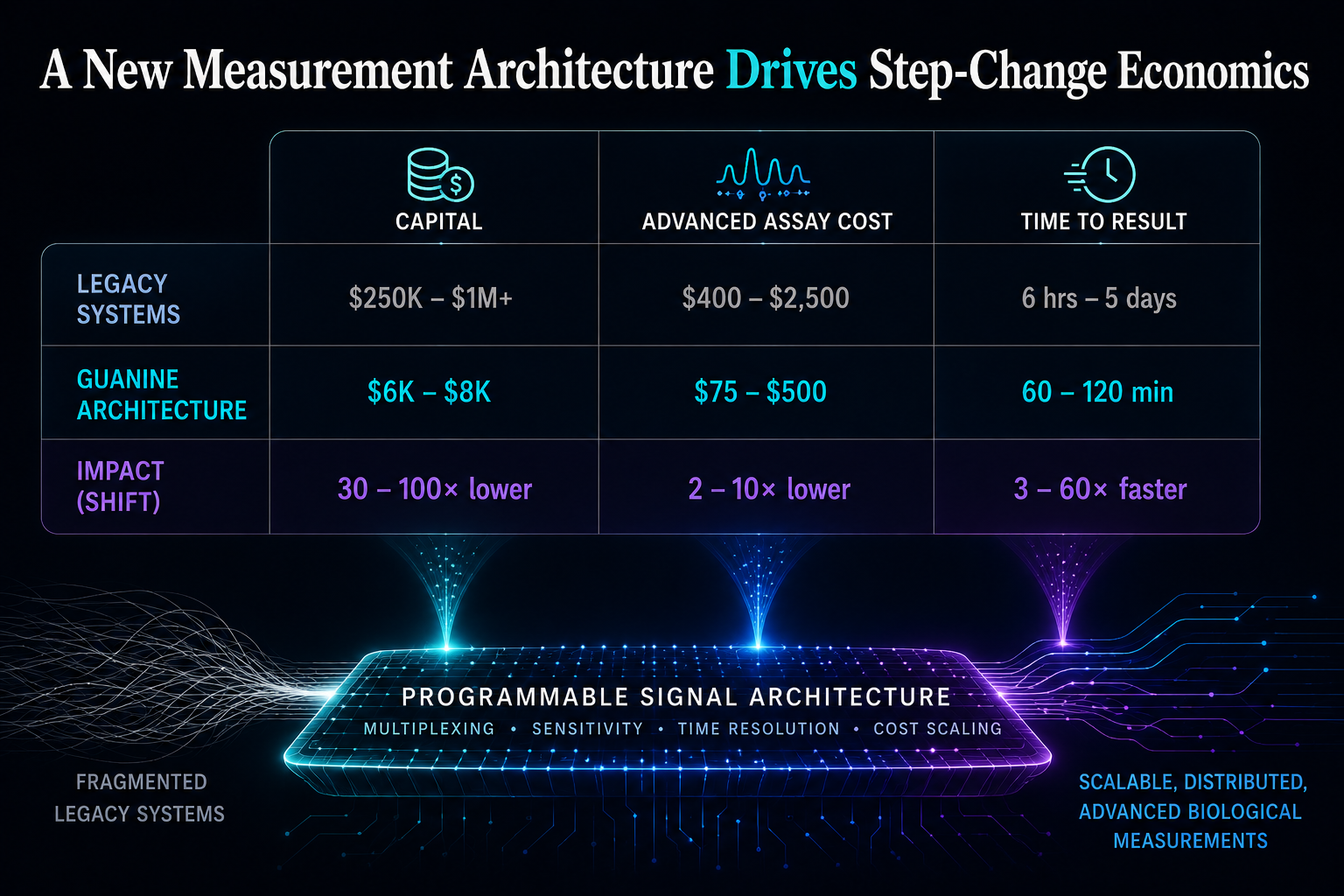
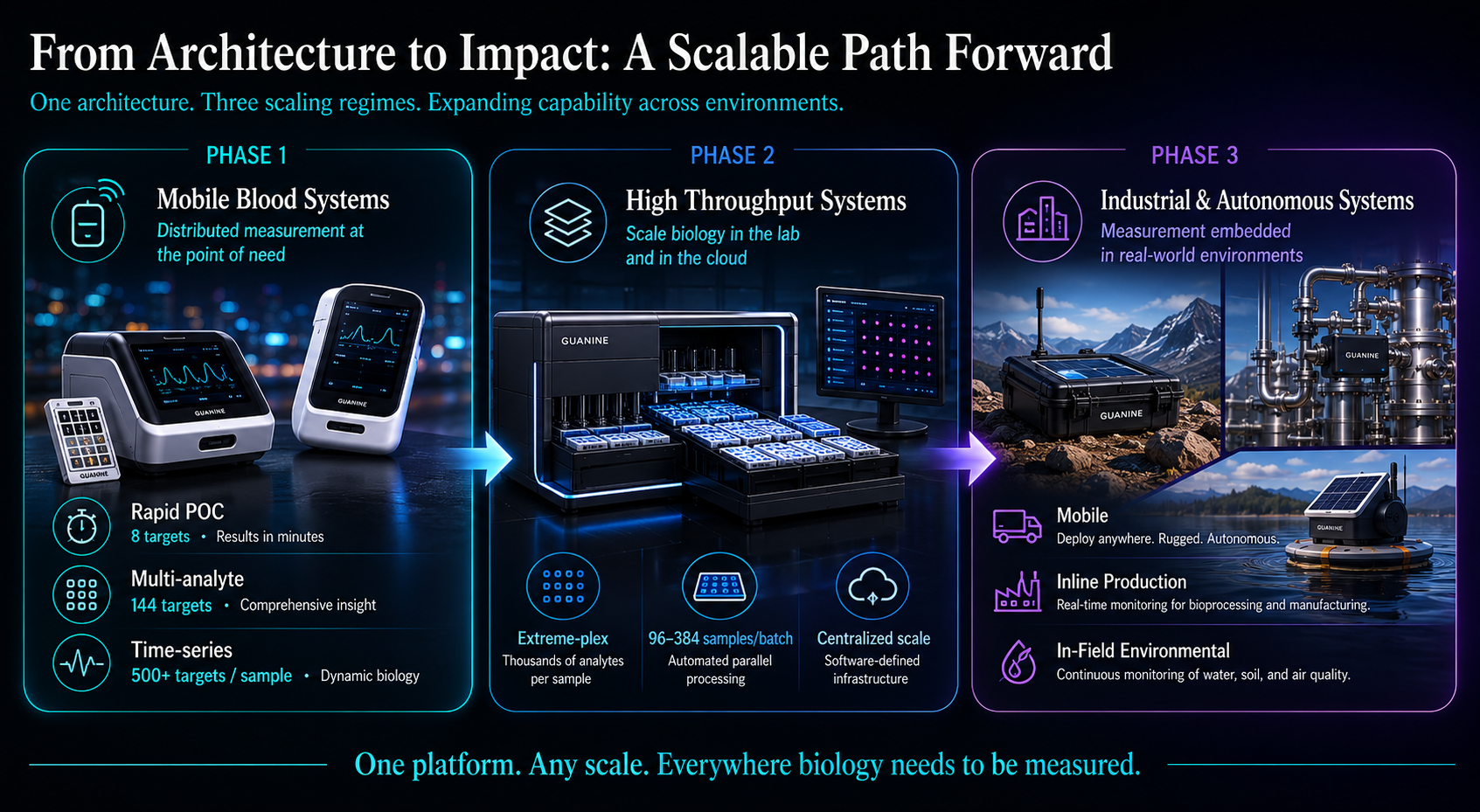
Guanine enables advanced biological measurement within compact programmable systems designed to expand deployment accessibility while increasing assay capability.
By combining multiplexing, sensitivity, time-resolved measurement, and scalable automation within a unified platform, advanced assays can potentially be deployed with:
- lower capital requirements
- simplified integrated workflows
- reusable platform infrastructure
- scalable cartridge economics
- faster assay implementation
- broader distributed deployment potential
The result is not simply lower system cost. It is the ability to expand advanced biological measurement into more scalable, accessible, and commercially deployable testing environments.
Built for OEM Developers Scaling Advanced Assays
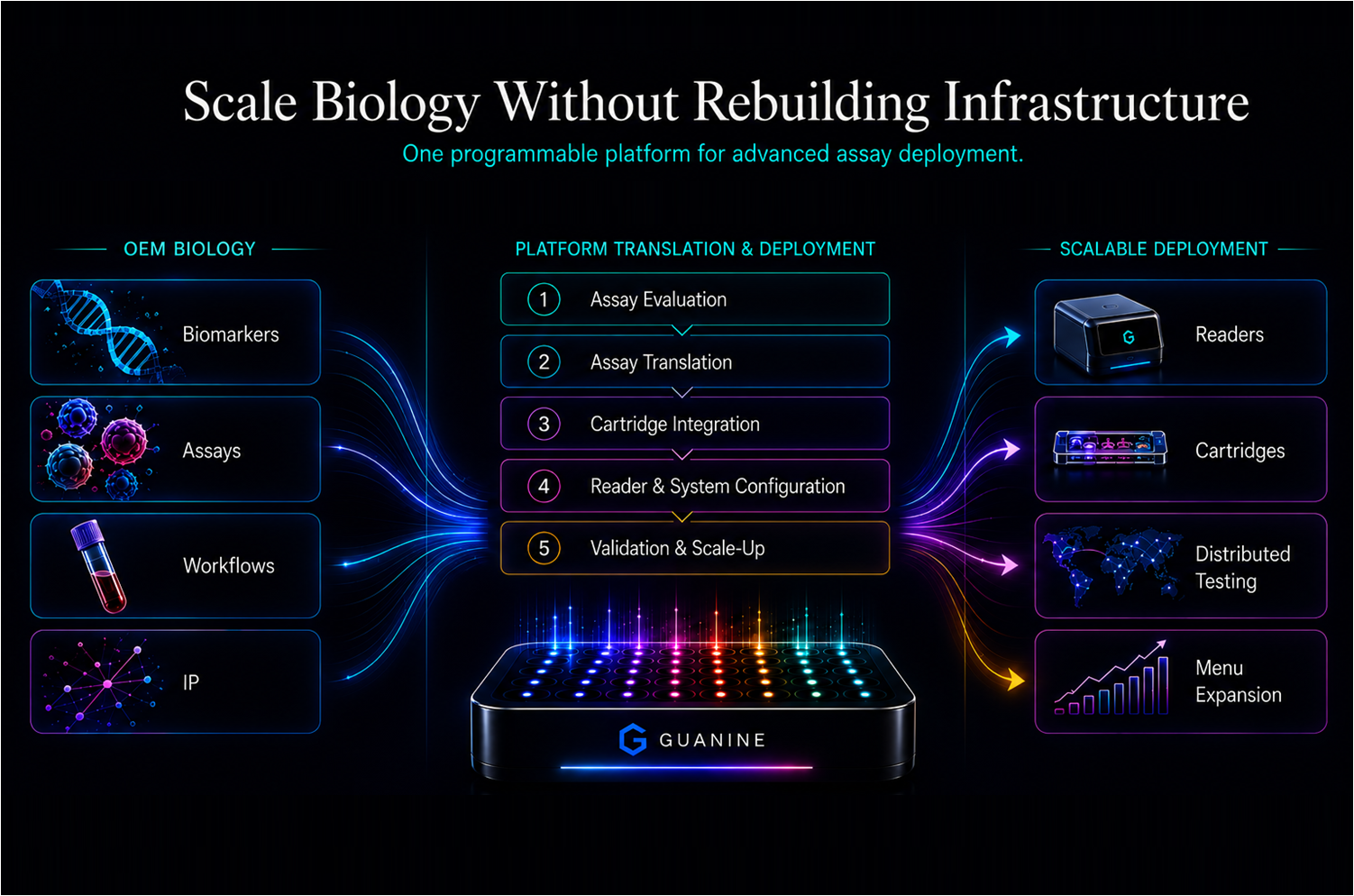
Guanine enables OEM developers to translate advanced biological assays into scalable deployable products without rebuilding measurement infrastructure for each new application.
OEM teams and/or Guanine can integrate existing biomarkers, assays, biological workflows and IP into a programmable measurement platform designed for:
- assay evaluation and platform translation
- cartridge integration and workflow automation
- reader and system configuration
- distributed deployment environments
- scalable menu expansion
- recurring consumables growth
Rather than developing separate instruments, workflows, and infrastructure stacks for each assay category, OEM developers can deploy multiple advanced assays within one scalable platform architecture.
This enables faster product expansion, broader deployment accessibility, and more efficient commercialization of advanced biological testing.
Multiplexing, Sensitivity, Time-Resolved Biology, and Cost Scaling — Within One Programmable Platform
Advanced assays no longer need to choose between:
- biological capability
- deployment scalability
- workflow simplicity
- infrastructure cost
- quantitative sensitivity
- dynamic biological insight
Guanine enables advanced OEM assays within a programmable biological measurement platform designed to scale differently from conventional systems.
The result is not simply faster testing. It is a new deployment model for advanced biological measurement.
Contact us for more information